Recommended News
tag

Steel filing cabinets are widely used in offices, schools, hospitals, government buildings, archives and other commercial environments.
For distributors and project buyers, however, choosing the right steel filing cabinet is not simply a matter of finding the lowest quotation.
Cabinet type, steel thickness, locking system, drawer slides, surface treatment, internal configuration and packaging structure can all affect product performance, shipping cost and customer satisfaction.
Before placing a bulk order, buyers should evaluate these factors together.
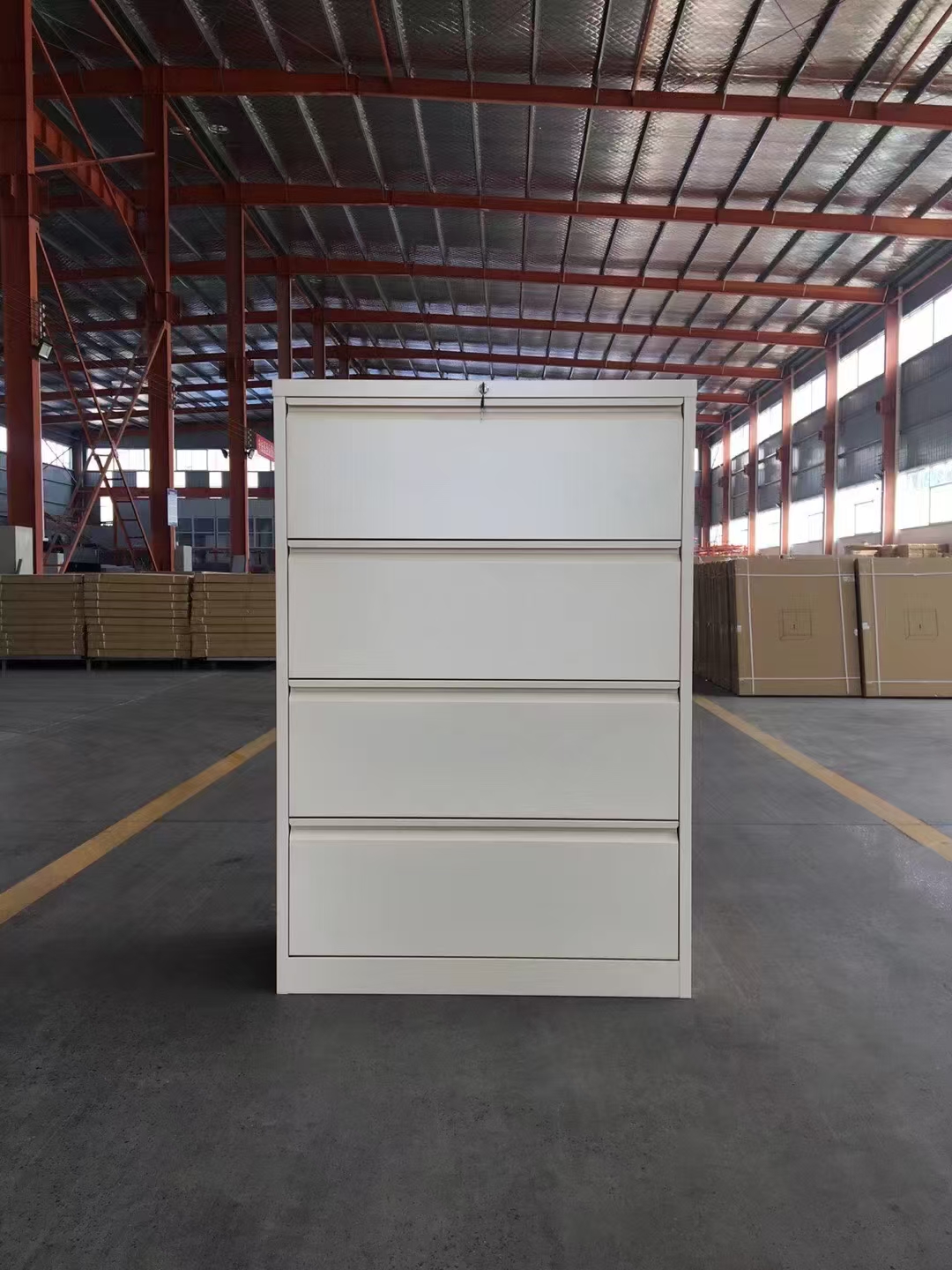
Different office environments require different storage solutions.
The most common types include vertical filing cabinets, lateral filing cabinets, mobile pedestals and door-style steel storage cabinets.
Vertical filing cabinets have relatively narrow cabinet bodies with drawers arranged vertically.
They are suitable for offices where floor space is limited and are commonly used for document storage.
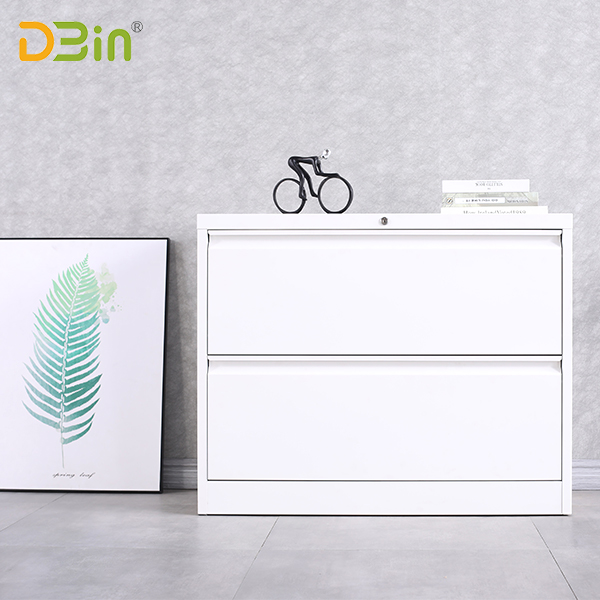
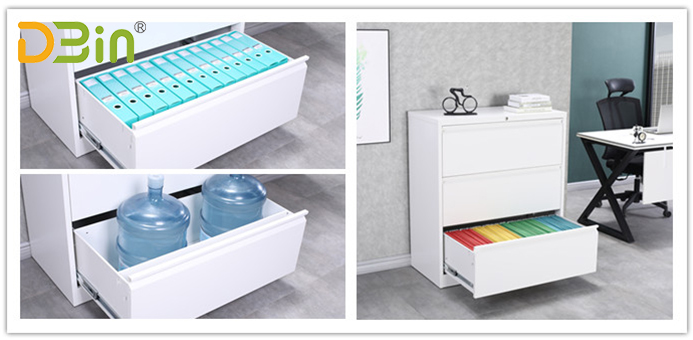
A lateral file cabinet is wider and usually provides easier access to large quantities of documents.
It is widely used in corporate offices, government departments, schools and archive rooms.
Lateral cabinets can also offer different drawer configurations according to local filing requirements.
Mobile pedestals are designed to fit underneath or beside office desks.
They normally combine drawers for stationery, personal items and documents and are especially suitable for modern office workstations.
Before sourcing, buyers should first consider available space, storage capacity and the way end users will access their documents.
Steel thickness is one of the specifications most frequently discussed when purchasing metal office furniture.
Common specifications can vary depending on product design, target market and required price level.
However, thicker steel does not automatically mean a better cabinet.
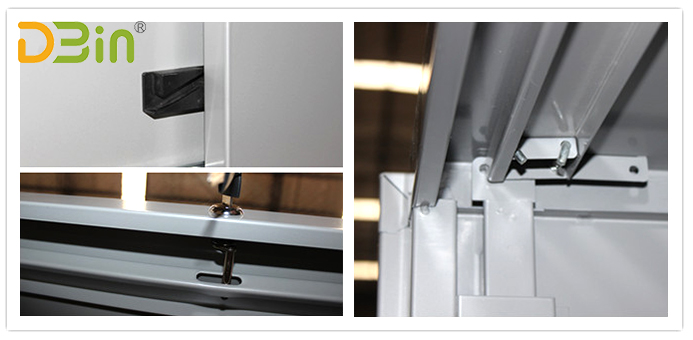
The overall strength of a filing cabinet also depends on:
For many wholesale and commercial projects, the best solution is to balance durability, product weight and purchasing cost.
A professional buyer should therefore evaluate the complete cabinet construction instead of comparing steel thickness alone.
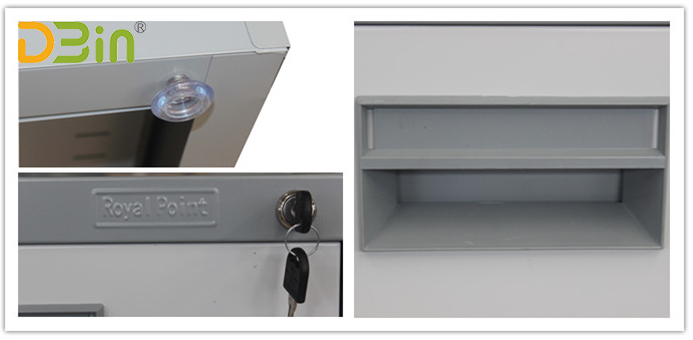
Security is another important factor for office filing cabinets.
Depending on the application, common lock options include key locks, central locking systems, combination locks and electronic locks.
For drawer filing cabinets and mobile pedestals, a central locking system can secure multiple drawers with one lock.
Some drawer cabinets can also use an anti-tilt mechanism that prevents several drawers from opening at the same time.
This helps improve cabinet stability and workplace safety.
For project orders, the lock type should be confirmed according to the usage environment and local customer preferences.
For drawer-based filing cabinets, drawer slides directly affect the user experience.
High-quality ball-bearing slides allow drawers to open and close more smoothly.
Full-extension slides can also make it easier for users to reach documents stored at the back of the drawer.
Different countries may use different document formats, including:
A4, F4, Letter and Legal size.
For this reason, importers should confirm the local filing system before finalizing the internal drawer configuration.
Adjustable rails, removable dividers and hanging-file frames can make a filing cabinet more suitable for different office applications.
Most modern steel office furniture uses electrostatic powder coating.
A good coating process helps provide a smooth appearance while improving resistance to scratches, moisture and daily wear.
However, coating quality depends not only on the powder itself.
Surface preparation before spraying is also important because it affects coating adhesion and long-term product appearance.
For wholesalers and project customers, customized colors may also be required.
Standard colors such as white, gray and black are widely used, while customized colors can help distributors match their own product ranges or project requirements.
For international buyers, packaging volume can significantly affect landed cost.
Many steel filing cabinets can use a KD, or knock-down, structure.
Instead of shipping the cabinet fully assembled, the main panels are packed separately and assembled after delivery.
This structure can substantially improve container utilization compared with fully assembled cabinets.
For container orders, buyers should ask suppliers for:
When purchasing steel office furniture from overseas, the lowest EXW price does not necessarily result in the lowest final cost.
Efficient packaging can sometimes create greater savings than a small difference in factory price.
Different markets have different product preferences.
Before mass production, buyers should confirm specifications such as cabinet size, steel thickness, color, handle design, lock type, drawer configuration and packaging.
For distributors and furniture brands, OEM steel filing cabinets can also be customized with private labels, logos and branded packaging.
Using an existing mature cabinet structure while adjusting specifications for the local market can reduce development risk and make new product launches more efficient.
Price should be only one part of the supplier evaluation process.
For long-term wholesale cooperation, buyers should also consider manufacturing capability, quality control, production consistency, packaging experience and export experience.
A reliable steel filing cabinet manufacturer should be able to clearly provide:
Product specifications, packing details, loading quantities, customization options and production information before an order is confirmed.
For repeat orders, consistent quality and stable production are often more valuable than a small difference in unit price.
Before confirming an order, buyers should clarify several key points with the supplier.
These include:
Cabinet dimensions, steel thickness, lock type, drawer slide specifications, powder coating, packaging structure, MOQ, production lead time, container loading quantity and OEM requirements.
Providing the supplier with your target market and sales channel can also help them recommend a more appropriate configuration.
For example, a distributor supplying commercial projects may have different quality requirements from an online retailer competing mainly on retail price.
Choosing the right steel filing cabinet requires a balance between durability, functionality, price and logistics efficiency.
For distributors, wholesalers and project buyers, steel thickness, locking systems, drawer construction, powder coating and KD packaging should all be considered before making a purchasing decision.
DBin Office Furniture manufactures steel filing cabinets, lateral file cabinets, vertical filing cabinets, mobile pedestals and other steel office storage products for international wholesale and project customers.
If you are sourcing steel filing cabinets for your market, you can send us your required dimensions, quantity, target market and preferred specifications.
Our team can recommend suitable models and configurations based on your purchasing requirements.
There is no single specification suitable for every market. The appropriate thickness depends on cabinet structure, application, target price and quality positioning. Structural reinforcement should also be considered together with steel thickness.
KD means knock-down. The cabinet is shipped in separate panels and assembled after delivery. This structure can reduce packaging volume and improve container utilization for international orders.
Yes. Common OEM options include cabinet dimensions, steel thickness, color, locks, handles, drawer configuration, logo and packaging.
Yes. Steel filing cabinets are widely used in offices, schools, hospitals, government buildings, archive rooms and other commercial environments because they provide durable and standardized storage.
.png)